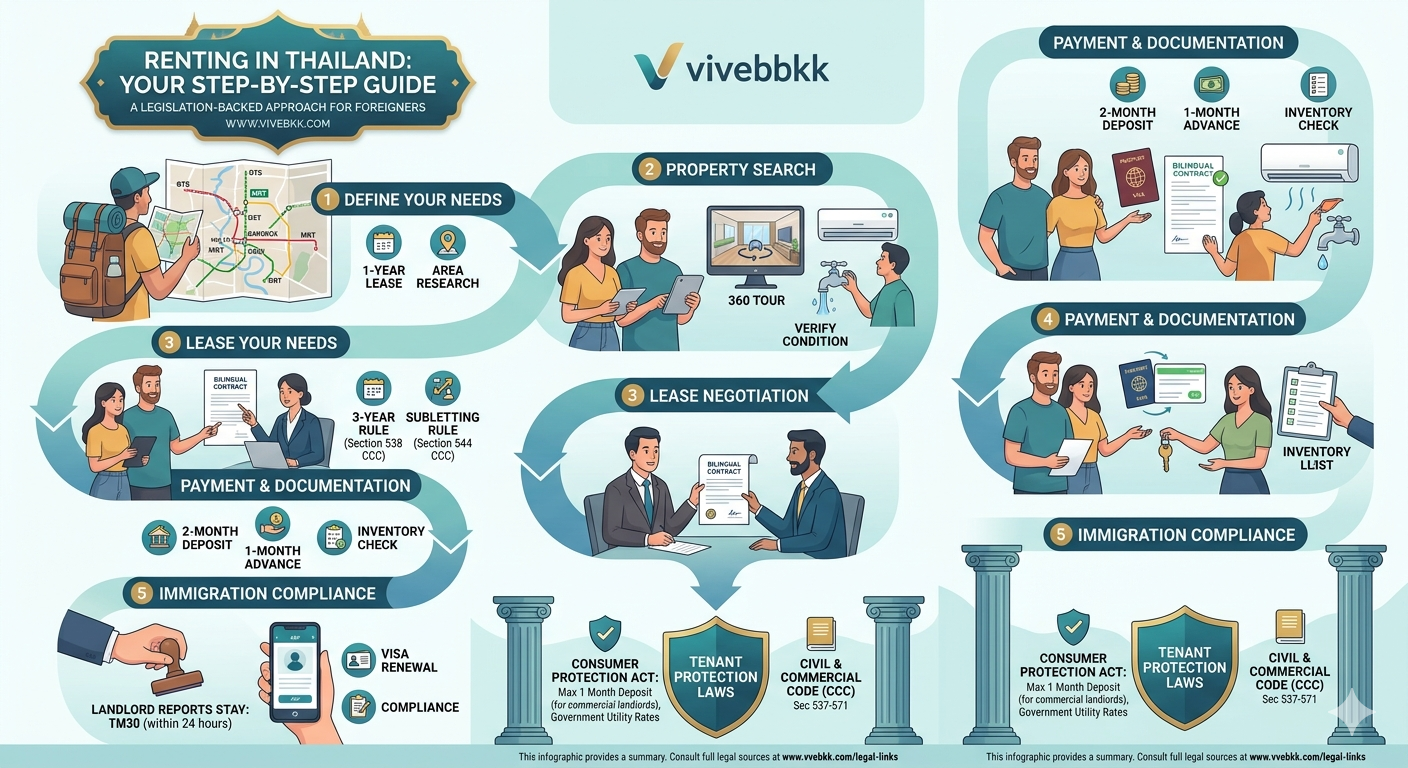
How to Rent a Condo in Thailand
วิธีเช่าคอนโดในประเทศไทย
Step-by-step guide for foreigners
Renting a condominium in Thailand is a popular and straightforward option for expats, digital nomads, and long-term visitors. The Thai rental market offers excellent value, modern amenities, and a seamless transition into local life. However, navigating a foreign real estate market requires an understanding of local laws, standard practices, and tenant protections to ensure a secure transaction.
This guide provides a comprehensive, legally-backed, step-by-step framework for foreigners looking to rent a property in the Kingdom of Thailand.
1. Understanding Your Legal Rights Under Thai Law
Before browsing properties, it is essential to understand that Thai law treats foreign and Thai tenants equally regarding residential leases. Your tenancy is primarily governed by the Thailand Civil and Commercial Code (CCC), specifically Sections 537 to 571 (governing the "Hire of Property").
Key legal parameters established by the CCC include:
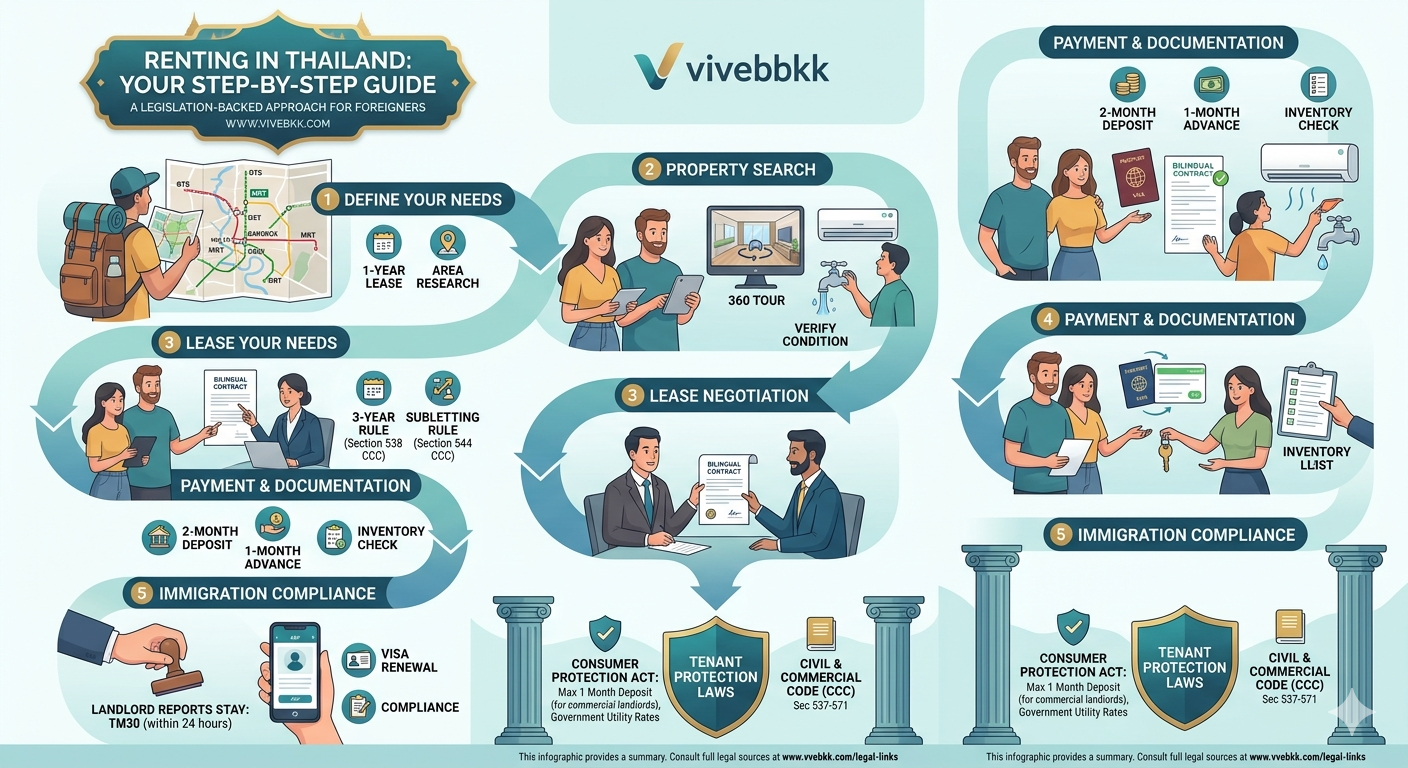
2. Step-by-Step Process to Renting a Condo
Navigating the rental journey efficiently involves following a structured process from budget definition to moving day.
3. Crucial Tenant Protection Laws & Financial Standards
The regulatory landscape regarding residential tenancies underwent significant changes to strengthen tenant rights. When renting from a "business operator" (defined under Thai law as a landlord owning and leasing three or more residential properties), the lease is bound by consumer protection regulations.
The Notification of the Contract Committee on Residential Leasing under the Consumer Protection Act sets strict guidelines that landlords cannot bypass:
4. Avoiding Short-Term Rental Pitfalls (The Hotel Act Warning)
If you are an expat looking for a temporary space while searching for a long-term home, be highly cautious of daily or weekly rentals in standard residential condominiums.
Under the Thailand Hotel Act B.E. 2547 (2004), renting out private residential property or individual condominium units for durations less than 30 days without a proper hotel license is illegal. Many condominium juristic offices strictly enforce this by-law, restricting building access, pool usage, or gym entry for short-term guests. To maintain absolute legal security, always ensure your tenancy agreement is structured for 30 days or longer.
Summary Checklist for Foreign Tenants
Before signing your lease and handing over funds, verify this final checklist:
By ensuring compliance with the Civil and Commercial Code and validating your landlord's adherence to Thailand's consumer protection acts, your rental experience in Thailand will be secure, legal, and stress-free.